
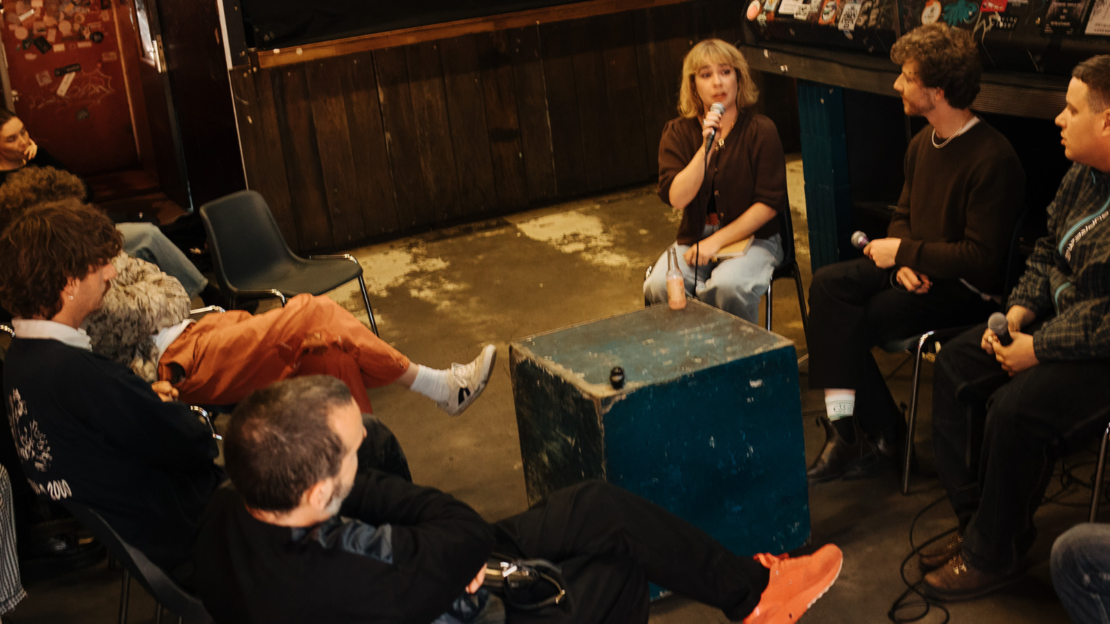

In this guest blog, Pauline Bourdon Founder and Director of sustainable events and touring consultancy Soliphilia, shares her insights from two recent projects funded by France 2030: Projet M.A.T.R.I.C.E. and Courts-Circuits, both of which reimagine the future of touring in unique ways.
“Since moving to the UK, I have always been interested in analysing the differences in governance and cultural policy between France and the UK, two systems I’ve always seen as complementary rather than contradictory. Different models, different institutions, different cultural infrastructures and unsurprisingly facing many of the same challenges when it comes to delivering a fair, green and kind transition in the midst of today’s polycrisis.
Back in February, while at the Green Events and Innovations conference (GEI), I came across two groundbreaking projects funded by France 2030: Projet M.A.T.R.I.C.E. and Courts-Circuits. Both explore, in different ways, what the future of touring could look like.
Finding ways to create a sustainable model for touring is at the centre of Soliphilia’s mission. I truly believe we can provide touring conditions that are fair, kind, localised, respectful of the planet and are actually sustainable for artists and crew.
Earlier in June, I was invited by Courts-Circuits to Amsterdam for the launch of its report, EU Perspective on Slow-Touring in a Fast-Paced Industry, which focused on the electronic music sector. The project demonstrates that shorter artistic circuits can be both a sustainable and profitable alternative to current programming models, using real world experimentation to test slow tours, economic frameworks and training programmes for artists and event professionals.
The report, commissioned by Technopol and produced by Vibelab, concludes that slow touring, when rooted in regional ecosystems and cooperative networks, is far from a utopian idea and presents a real alternative. When equity is designed into the model from the outset, it can deliver significantly kinder and more resilient touring conditions for DJs and electronic music artists.
These findings provide valuable inspiration for strengthening the local electronic music scene and grassroots club ecosystems in the UK. A focus on building regional artistic circuits resonates with initiatives currently being developed by Music Venue Trust.
After joining the team of experts to work on the next phase of Projet M.A.T.R.I.C.E in May, I was invited by Ekhoscènes to speak at its conference, Convention des Parties Prenantes #2. Presenting on the UK landscape and emerging approaches to sustainable live music and touring, it was a wonderful opportunity to showcase the work of some of my favourite organisations and longtime collaborators including Vision for Sustainable Events, Music Declares Emergency, Julie’s Bicycle, A Greener Future, EarthPercent and The Association of Independent Festivals.
Led by Ekhoscènes, the French trade body representing the private live entertainment sector, Projet M.A.T.R.I.C.E. is a collaborative R&D programme exploring how circular economy principles can be embedded into the planning and delivery of live tours through what the French call éco-conception de tournée. Rather than focusing solely on carbon reduction the 3-year programme examines the skills, governance models, operational frameworks and cross sector collaborations needed to make touring more resource efficient and resilient.
As part of its experimental phase, Projet M.A.T.R.I.C.E. has brought together producers, promoters and industry professionals to pilot its methodology across five tours running between October 2026 and December 2027, spanning different scales of live performance. Each case study will explore different solutions to improve specific areas from production design, freight and logistics, technical equipment, venue collaboration to wider touring practices, generating practical insights and scalable solutions for the sector.
Thanks to the convening power of Ekhoscènes’s union, most attendees weren’t sustainability specialists but industry professionals looking to deepen their understanding of what a meaningful transition could look like. The convention combined research-led presentations. practical feedback session by the producers involved in the programme (Bleu Citron, Talent Boutique, Le Mur du Songe, W Spectacle) alongside various workshops.
The day closed with one of our sector’s most important stakeholders: audiences! We heard findings from a pioneering qualitative study commissioned by the M.A.T.R.I.C.E. project and carried out by Toluna Harris Interactive, exploring how audiences engage with the environmental challenges facing live music, before finishing with a panel discussion on superfans.
Reflections
- France’s capacity to reflect on, analyse and structurally support culture remains one of its greatest strengths.
- The UK could benefit from its own renewed movement for the democratisation and decentralisation of culture.
- The UK’s ability to organise quickly, provide creative, real solutions and mobilise through its DIY heritage remains one of its defining strengths.
- Carbon emissions account for only around 29% of a tour’s total environmental impact; mineral resource extraction, particle pollution and human toxicity also deserve our attention.
- Large-scale productions currently have a role to play in equitably financing innovation, supporting grassroots ecosystems, testing new touring formats and accelerating sustainable solutions.
- Slow touring puts the human experience back at the centre of touring and can foster the social exchange our cultural and political climate increasingly needs.
- Fans recognise they have a role in music’s green transition and would happily engage but only if responsibility is shared between artists, organisers and audiences.
- Nearly every greener touring practice examined highlights potential improvements to artist and crew well-being and mental health as one the benefits.
- Stronger collaboration between promoters, producers and venues, including sharing line-ups and coordinating routes, could significantly expand regional music ecosystems.
- Sector-wide training and upskilling are essential to ensure sustainable initiatives can be implemented, refined and scaled.
- France’s ressourceries culturelles (shared cultural resource hubs where materials, sets, props, backline and equipment are collected, reused, repaired and redistributed rather than discarded) offer an inspiring model for embedding circularity into live performance.
- Resilience, joy and thriving communities depend on marginalised voices being genuinely heard, actively nurtured and meaningfully included.
I believe that while many climate and social justice solutions will need to be hyperlocalised (from resource efficiency to artistic network), international collaboration remains essential. It allows us to connect with other people working on a better future and help us imagine new formats for our cultural sector: Ones that place artist development, team well-being, fair access to music and sustainable careers at their centre, while restoring culture to its role as the social mycelium that quietly connects us all.”
About Pauline: Pauline Bourdon is Founder and Director of sustainable events and touring consultancy Soliphilia and a Forum Member at Vision for Sustainable Events. Pauline Bourdon brings a unique set of logistical expertise and unshakable commitment to climate and social justice. She works with major festivals Boomtown, Team Love & Mutek alongside working on sustainable touring with Hollie Cook, World Wise Touring, Louis VI & Holysseus Fly.
Beyond her consultancy work, Pauline is a committed educator and advocate for knowledge sharing and collaborative learning for systemic change. She lectures in climate & social justice in the music industry at universities such as BIMM Bristol & London and regularly guest lectures across the UK. She is part of a pioneering industry network of change-makers, contributing to the UK music industry’s transition and beyond.
Find Pauline on Linkedin
Learn about Soliphilia
Discover Projet M.A.T.R.I.C.E. and Courts-Circuits