
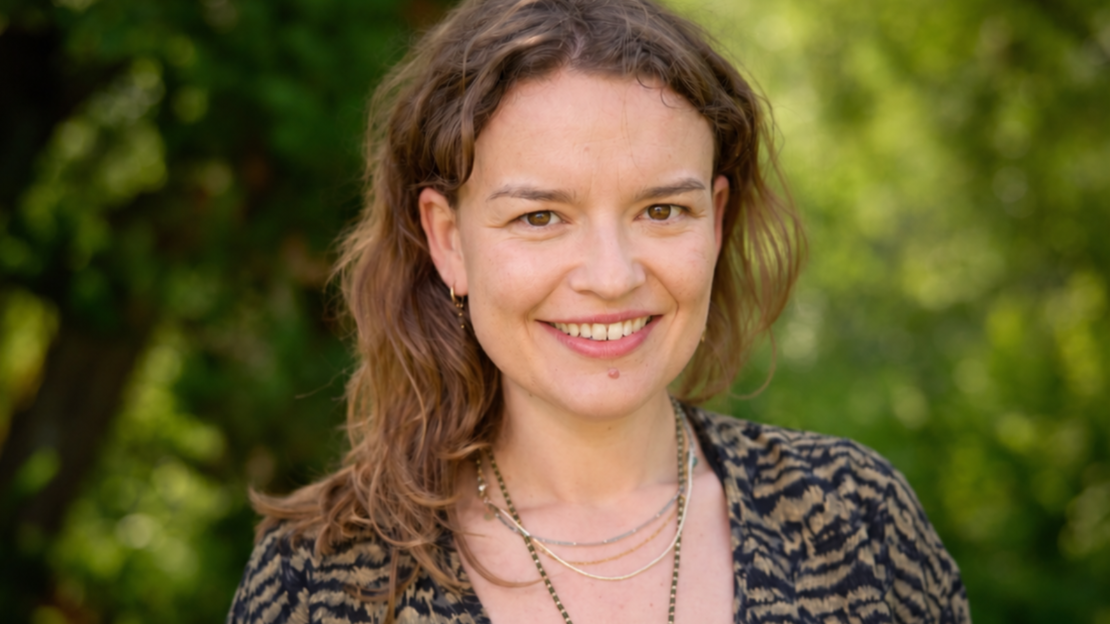

In this guest blog, Leonore van den Ende, organisational anthropologist at Vrije Universiteit Amsterdam, shares how festivals can act as living labs to drive sustainability transitions both on-site and within wider society. Drawing on research co-authored with Marije Galama and published in Event Management, the post explores how temporary event spaces allow organisers, entrepreneurs, and policymakers to experiment with circular systems and collaborative innovations. Key real-world trials, such as Into the Great Wide Open eliminating 350,000 disposable items through reusable tableware, and Welcome to the Village cutting 6,500 litres of diesel and 17 tonnes of CO₂ emissions using battery storage, demonstrate the tangible power of festival-based experimentation. The piece also addresses the critical challenge of scaling these lessons beyond the festival gates to achieve long-term societal impact. Read the full overview below where Leonore outlines the practicalities and findings of using events as engines for broader change:
How can festivals contribute to sustainability transitions, both within and beyond the event itself?
As an organizational anthropologist working in the Department of Organization Sciences at Vrije Universiteit Amsterdam, I study how organizations collaborate, experiment with alternatives, and drive societal change from a cultural perspective. Festivals are particularly interesting in this regard, as they bring together diverse organizations, people, and practices in a temporary space that can create opportunities for innovation and transition.
Together with my co-author Marije Galama, I explored this potential in our article, Festivals as Living Labs: Innovating Events for Sustainability Transitions, published in Event Management. Our research examines how festivals can be organized as living labs to experiment with sustainable innovations, and whether and how these innovations can contribute to broader societal change beyond the event.
Why festivals as living labs?
Festivals often face criticism for their environmental impact, including high energy and material consumption, transport emissions, and waste production. At the same time, they offer unique opportunities to experiment with more sustainable ways of organizing these very things. Festivals can be understood as temporary settlements in which many of the challenges we face in everyday life—from food and water to energy, mobility, and waste management—converge in a bounded yet flexible space. Beyond their material and technological dimensions, festivals are social and cultural spaces where large numbers of people come together, interact, and experience alternative ways of doing things.
Tapping into this transformative potential, event organizers increasingly use festival spaces as living labs to experiment with sustainable practices and solutions, such as the Dutch DGTL festival, which pioneered circular festival production. A living lab is a real-world environment in which diverse stakeholders, including organizers, entrepreneurs, researchers, policymakers, and citizens, collaborate to test and develop innovations. Rather than simply implementing sustainable measures in festival production, a living lab approach uses the festival as an experimental space to explore both technological innovations, such as sustainable products and circular systems, and social innovations, including new practices and forms of collaboration. In this way, festivals can generate insights and approaches that have the potential to support sustainability transitions beyond the event itself.
Our research draws on examples from Dutch festivals such as DGTL, Into the Great Wide Open and Welcome to the Village, organizations such as Lab Vlieland, Innofest, and Green Events (now Buro Nuvo), institutions like the Ministry of Infrastructure and Water Management, and broader initiatives like the European Green Deal for Circular Festivals, all of which are actively involved with festival living labs. In this context – drawing on interviews, observations, and desk research – we examined how experimentation and collaboration are organized to facilitate sustainability transitions.
What did we find?
Our findings highlight three important insights.
1. Festivals provide opportunities to experiment with sustainable innovations.
The temporary and flexible character of festivals creates opportunities to test new solutions in practice, learn from experience, and adapt innovations based on user feedback. For example, as part of the Mission Reuse initiative in 2022, Into the Great Wide Open introduced reusable cups, plates, and cutlery to tackle single-use plastics through a collaborative effort involving Lab Vlieland, the ministry, and other partners. When the initiative first used reusable tableware in 2022, it eliminated 350,000 disposable items. Visitor feedback was also positive, demonstrating the potential of this approach for other festivals and events. By bringing together large numbers of people, suppliers, and organizers in a temporary setting, festivals offer opportunities to explore how sustainable alternatives work under real-world conditions.
2. Innovation is a collaborative process.
Festivals cannot drive innovation independently. Developing and implementing sustainable solutions requires collaboration among partners with complementary expertise, resources, and responsibilities. At Welcome to the Village, for example, festival organizers and innovators worked with an energy company, a power-rental company, an infrastructure specialist, and GreenBattery, a provider of mobile energy-storage systems. Together, they integrated battery storage into the festival’s existing electricity infrastructure, replacing conventional diesel generators and saving more than 6,500 liters of diesel and 17 tonnes of CO₂ emissions over four days. This example shows how multi-partner collaboration enables sustainable innovation in practice and creates opportunities to apply these innovations at other events and construction sites.
3. Making an impact beyond the festival remains a challenge.
While festivals can provide valuable environments for experimentation, successful pilots do not automatically translate into broader societal change. Innovations need to find their way into other organizations, networks, and everyday practices. This requires ongoing collaboration, knowledge exchange, and stakeholder involvement to support further development and implementation. Our research shows that festival organizations increasingly aspire to contribute to sustainability transitions beyond their events. However, their temporary, seasonal nature, limited resources, and dependence on external partners can make it difficult to sustain these efforts year-round. More work and cross-sectoral collaboration are needed to ensure innovative processes continue after the festival ends.
Beyond the festival: Organizing for change
These findings suggest that festivals can be more than temporary events. Through a living lab approach, they can become platforms for what we call event-based innovation: a process that extends beyond innovating the event itself to consider how innovations are developed, organized, and potentially integrated into wider practices, organizations, and systems.
For practitioners, this means looking beyond isolated events and experiments. How can festival living labs be connected to other events and experimental spaces? How can knowledge and experience be shared? Which stakeholders need to be engaged, and how can we help stakeholders integrate innovations, lessons learned, and new practices? How can collaboration continue after the festival ends?
Ultimately, the transformative potential of festivals as living labs lies not only in the innovations they test, but in the collaborative processes and social networks through which these innovations may contribute to sustainability transitions in the long run. Understanding how to organize these connections and processes remains a key challenge for practitioners and researchers working toward societal change.
Interested in learning more?
Read the full article, Festivals as Living Labs: Innovating Events for Sustainability Transitions, in Event Management.